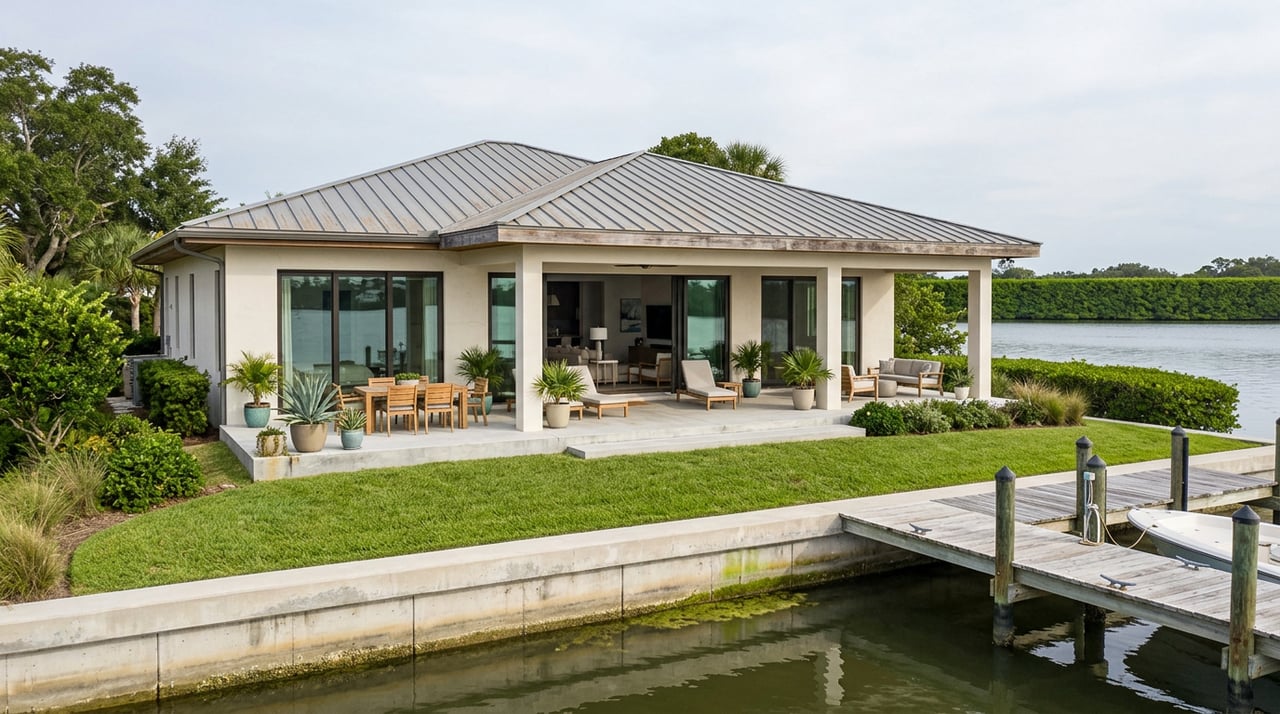
Two listings, a few hundred feet apart on the same stretch of water, priced within $50,000 of each other. One is a single-family home with a private dock. The other is a townhome at Kuapa Isle with the same water outside a nearly identical sliding door. Same boat parade every December, same five-minute run out to Maunalua Bay, same view from the lanai.
What's different sits in the deed, not the listing photos. And it decides who writes the check the day a seawall needs work.
That distinction is the piece of Hawaii Kai marina real estate that gets skipped over most often, and it matters more than the view itself once you look at what the two ownership structures actually obligate you to.
Same Marina, Different Deed
Hawaii Kai's marina is unusual even by Oahu standards. It is the only community on the island where a home can sit on private water with direct boat access to the ocean, a fact that anchors a large share of the neighborhood's premium pricing. But the marina itself is governed by a non-profit corporation, the Hawaii Kai Marina Community Association, and its rules split maintenance responsibility along ownership lines rather than along the waterline.
Under the association's rules, seawall repair, maintenance, and replacement in front of a single-family home is the sole responsibility of that individual owner. Seawalls adjacent to condominium land, at communities like Koko Isle Circle and Kuapa Isle, fall to the individual condominium association instead. Seawalls near the commercial centers, Koko Marina Center, the Hawaii Kai Shopping Center, and the Hawaii Kai Towne Center, are the responsibility of those shopping centers.
In plain terms: a single-family owner on a marina lot inherits their seawall alone. A condo owner in a marina-front building shares that same category of expense with every other owner in the association, funded through monthly dues and a reserve fund built for exactly this kind of project.
Here is how that plays out across the two most common ways to buy into the marina:
| Single-family marina lot | Marina-front condo or townhome (Esplanade, Kuapa Isle, Mawaena Kai, Koko Isle) | |
|---|---|---|
| Who repairs the seawall | The individual homeowner, alone | Shared through the association's reserve fund |
| Marina community due (2026) | $600 per year to HKMCA | $600 per year to HKMCA, on top of the building's own HOA dues |
| Boat registration | $20 per year at the marina-waterfront resident rate | $20 per year if the unit carries a deeded dock; confirm this in the governing documents |
| Ongoing monthly cost | None beyond the HKMCA due, unless the lot sits inside a separate street or gate association | Monthly HOA dues that fund shared insurance, exterior upkeep, and seawall reserves |
| What the price reflects | Land, structure, and a private seawall the buyer inherits outright | Land, structure, and a fractional claim on a reserve fund that may or may not be fully funded |
The number that should catch a buyer's attention isn't the price. It's the reserve fund balance, because that number tells you whether the shared version of this liability has actually been paid for in advance or is waiting for a special assessment.
What the Association Dues Actually Cover, and What They Don't
The Hawaii Kai Marina Community Association sets its own annual due separately from any building's HOA. For 2026, that due is $600, payable by January 1 to Hawaiian Properties, the management company that administers the marina. This fee covers marina patrol, water quality work, and administration of the shared waterway. It does not touch seawall repair for any individual property.
Boat registration runs on a second fee schedule entirely. A marina-waterfront resident registers a vessel for $20 a year. A Hawaii Kai resident who does not live on the marina but wants access pays $575 a year for the same privilege. Vessels renting slip space at Koko Marina pay $20 a year as well. None of these fees fund seawall work either. They fund patrol staffing and administration of who is allowed on the water and under what rules.
That distinction matters because it means the dues everyone pays are not the mechanism that protects an owner from a seawall bill. For a condo owner, that protection comes from the building's own HOA reserve fund, a separate line entirely from HKMCA dues. For a single-family owner, there is no pooled protection at all. The reserve fund is whatever savings the individual homeowner has set aside, if any.
The neighborhood has a recent example of what that repair work actually costs to execute. The Hawaii Kai Shopping Center's seawall repair project ran from January 2026 through July 2026, several months of work on a single stretch of commercial seawall. Around the same window, the state's channel dredging work near the Maunalua Bay public boat ramp, under contract since mid-2025, wrapped up by April 2026 to keep the entrance channel navigable. Neither project touched a homeowner's private seawall, but both are useful evidence that marine infrastructure in this marina requires real money and real time when it comes due, not a hypothetical someday.
What This Means for the Price Tag
Hawaii Kai's broader housing numbers show a market that has slowed enough to give buyers room to ask these questions before removing contingencies. Over the three months ending in roughly May 2026, the median sale price across all of Hawaii Kai sat at $1.3 million, essentially flat year over year, while the average time on market stretched to 88 days, up from 71 days the year before. As of August 2026, home prices across the neighborhood ranged from $999,000 up to $16.5 million, with a median around $1.25 million.
Fidelity's April 2026 Oahu market report separated the property types more clearly: a single-family median of $1.6 million against a condo median of $652,500. That gap is not just square footage and finish level. It is also, in part, the price of the liability structure attached to each type. A single-family marina lot commands a premium partly because the buyer is purchasing full control of that seawall, for better or worse. A marina-front condo trades some of that premium for shared risk and a monthly bill that keeps funding it.
Current listings across the condo communities show that range in action. The Esplanade has listed units from around $575,000 for smaller floors up into the $900,000s for larger corner residences. Kuapa Isle listings have run from the high $900,000s past $1.6 million depending on unit size and water frontage. Both ranges sit inside buildings governed by a single reserve fund, which is exactly why the fund's health matters more than any single unit's price.
With days on market running longer than they did a year ago, a buyer has real leverage to ask for the paperwork that answers the seawall question before writing an offer, not after.
Before You Write the Offer
For any marina-front property in Hawaii Kai, ask for:
- The most recent reserve study, if the property is part of a condo or townhome association, and whether seawall and dock replacement are itemized separately
- A repair history for the seawall fronting the specific lot, including any past assessments tied to it
- Written confirmation of whether the boat dock is deeded to the unit or governed by a separate moorage agreement that may not automatically transfer
- The HKMCA registration status for the vessel, if a boat conveys with the sale
- For single-family lots, an engineering opinion on the seawall's current condition, since there is no association absorbing that cost if it needs work
None of this changes what makes Hawaii Kai worth considering. It changes what a buyer is actually agreeing to when the listing says "marina front."
A Few Questions Buyers Ask
Does every Hawaii Kai marina property come with a boat dock? No. Some marina-front homes and condos have a private dock included, others do not, and some docks require separate approval from the marina manager before installation or modification. Confirm dock rights in writing rather than assuming they come with marina frontage.
Is the HKMCA fee the same as my condo's HOA fee? No. The $600 annual HKMCA due funds marina-wide administration and patrol. It is entirely separate from whatever monthly HOA dues a condo or townhome association charges, which is where seawall and dock reserves are typically funded for those properties.
Can a single-family owner ever get help paying for seawall repair? The marina association's rules place that responsibility on the individual owner for the stretch of seawall in front of their property. There is no shared fund at the HKMCA level for single-family seawall repair, which is why an engineering assessment before purchase matters more for these lots than for condo units.
If you are weighing a marina-front purchase in Hawaii Kai and want a clear read on what a specific listing's association documents actually say about reserves and seawall history, Sue's HI Homes can help you get the right paperwork in front of you before you write an offer. Schedule Your Free Consultation to start the conversation.