Selling your Waikele townhome soon? A few focused changes can make your space feel brighter, bigger, and more inviting to today’s Oʻahu buyers. You want to highlight airflow, storage, and indoor–outdoor living without overspending or overwhelming your schedule. This guide gives you a practical, room-by-room staging plan tailored to Waikele and Waipio townhomes so you can present a polished, breezy home that photographs beautifully and shows even better. Let’s dive in.
Why staging Waikele townhomes works
Buyers in Waikele and Waipio value light, airflow, and easy connection to the lanai. Many townhomes have compact footprints, so you need to show clear flow from entry to living and dining, then to the kitchen and outdoor space. When you stage for storage and circulation, the home feels larger and more functional.
Your goals are simple:
- Maximize natural light and cross-breezes.
- Emphasize storage capacity in closets and cabinets.
- Clarify circulation through the main floor and out to the lanai.
- Present the lanai as an outdoor living room.
Room-by-room staging plan
Entry and foyer
Your entry sets the tone. Keep a clear path from the front door into the living area, and remove shoe clutter and personal items. If space allows, add a narrow console or floating shelf and one mirror to reflect light and create the feel of more space.
Checklist:
- Clear shoes, mail, and personal photos.
- Add a small, correctly sized rug and one low-maintenance plant.
- Use bright overhead lighting and a lamp for evening showings.
Living and dining
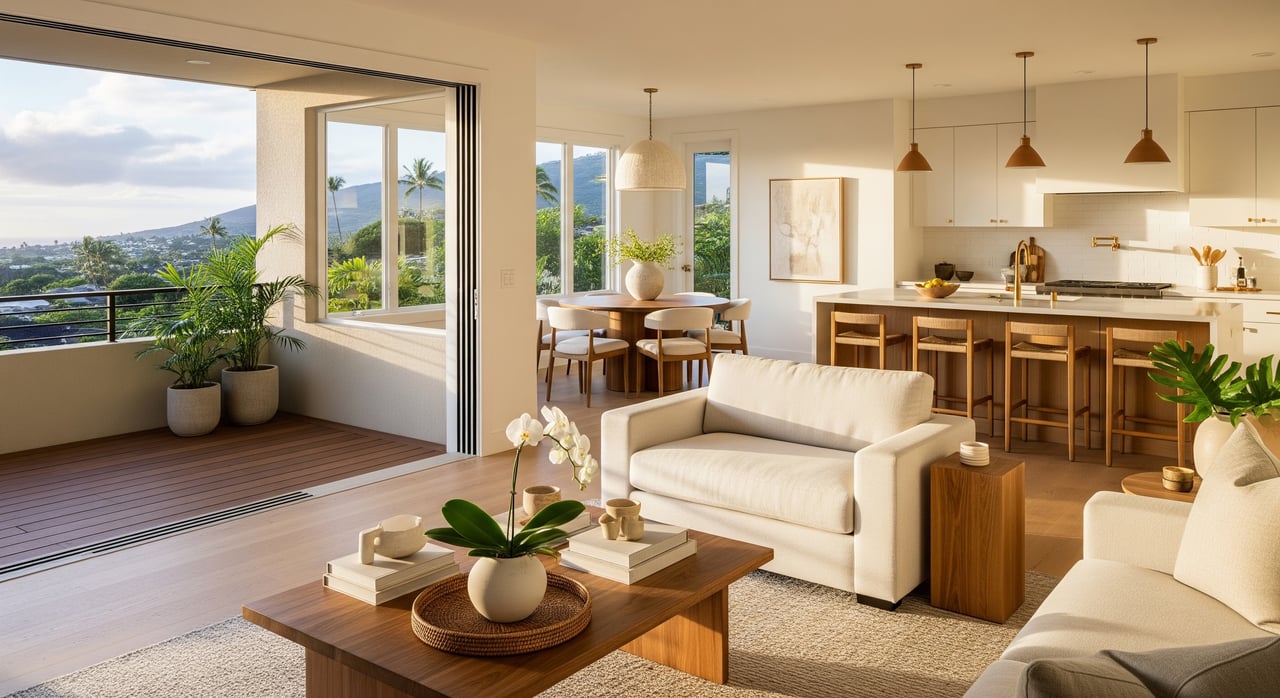
Most Waikele townhomes have open-concept living and dining, which makes layout crucial. Float the sofa slightly off the wall to open walkways, and orient seating toward the lanai or a natural focal point. Choose light upholstery or a simple slipcover to brighten the room, and scale the dining table so it does not crowd the path to the kitchen.
Checklist:
- Remove extra furniture to improve flow and sightlines.
- Create a conversation grouping for 4 to 6 people.
- Use one appropriately sized rug to anchor seating with furniture front legs on it.
- Style the coffee table with a simple trio: tray, plant, and one book.
- Open lanai curtains or blinds during photos to show light and views.
Kitchen
Kitchens sell homes, especially in smaller floorplans where functionality matters. Clear counters, keep only a few styled items, and deep clean every surface. If your budget allows, simple updates like fresh caulking or new cabinet knobs can make a big difference.
Checklist:
- Remove magnets and notes from the fridge.
- Hide countertop appliances where possible.
- Stage one prep zone with a cutting board, a small bowl, and a neat oil set.
- Brighten lighting and highlight under-cabinet lights if you have them.
- Empty and dry the sink before showings.
Bedrooms
Make the primary suite feel restful and spacious. Keep the bed as the focal point with neutral bedding, two accent pillows, and a throw. In secondary rooms, show flexibility by staging as a bedroom or a simple home office depending on your likely buyer.
Checklist:
- Remove personal photos and excess clothing.
- Stage one closet per bedroom with spaced hangers and a few bins to show capacity.
- Add matched bedside lamps, open windows for airflow, and use light curtains.
- Refresh worn bedding or mattress covers.
Lanai and outdoor space
The lanai is a lifestyle showcase in Hawaiʻi. Treat it as an outdoor room with scaled furniture that does not overwhelm the footprint. Use weather-resistant materials and simple greenery to suggest easy outdoor living.
Checklist:
- Sweep floors, clean screens, and remove beach gear or bulky items.
- Add a small bistro set for narrow lanais, or a compact sofa set for larger spaces.
- Use outdoor-safe cushions and a right-size outdoor rug.
- Keep sightlines open to highlight views.
- Consider string lights or lanterns for evening photography.
Light and airflow essentials
Bright, breezy homes stand out. Open all curtains and blinds, clean windows, and use a strategically placed mirror to bounce light. During showings, create cross-ventilation by opening windows on opposite sides where possible. If the day is humid and the A/C is off, low-noise fans and a dehumidifier help maintain comfort without strong scents.
Storage and decluttering that sells
Storage is a top concern in compact townhomes. Show at least one organized closet per level and a tidy utility or garage space if applicable. Consider renting a small offsite unit to store excess furniture and seasonal items while you list. The goal is to make every closet and cabinet look roomy, not stuffed.
Flow and circulation tips
Clear walkways communicate easy living. Maintain 30 to 36 inches of open path along main routes from the entry through living and dining to the lanai. Remove pieces that block doors or patio sliders, and use consistent flooring tones and rug placement to visually connect the first floor.
Materials that suit Hawaiʻi
Choose materials that resist humidity and salt air. Solution-dyed performance fabrics, teak or aluminum outdoor furniture, and sealed woods hold up well. Skip heavy draperies that trap moisture, and choose light sheers or woven shades. Add island-inspired accents, like natural fibers or sea-glass tones, in moderation to keep the look neutral and widely appealing.
Cleanliness, scent, and comfort
A spotless home photographs better and feels bigger. Keep scents neutral and minimal, and address any pet, cooking, or mildew odors before your first showing. Aim for a comfortable temperature during open houses so buyers linger and explore.
Photography and marketing details
Plan for professional photography once staging is complete. Prioritize images that show the indoor–outdoor connection, the kitchen’s prep and storage, and the flow between living and dining. A twilight shot with the lanai lights on can be a strong highlight. If your home is vacant, virtual staging is an option. Follow your MLS rules on disclosure if you use it.
HOA rules and safe staging
Before you begin, review HOA guidelines for access, vendor scheduling, and common-area use. Some communities restrict storage pods or items placed in shared spaces. Ensure staged pieces do not block exits or create hazards, and follow fire codes for lighting and extension cords.
DIY vs professional staging
When DIY staging fits
If you are comfortable editing furniture and styling neutrals, DIY can work well for occupied homes. Your focus is on decluttering, rearranging for flow, and adding a few key pieces to fix scale gaps. Hire a photographer who understands Oʻahu listings, and rent a sofa or dining set if your current pieces are oversized or worn.
DIY checklist:
- Follow the room-by-room lists above and remove 25 to 30 percent of visible items.
- Store extras offsite rather than stuffing closets.
- Invest in neutral bedding, matching lamps, and a quality living room rug.
When a professional stager is worth it
Vacant homes typically benefit most from professional staging, since furniture defines scale and function. If your floorplan is tricky or you prefer a hands-off approach, pros can handle space planning, rentals, delivery, and styling suited to local climate and tastes. For higher-priced listings, the stronger presentation may justify the cost.
Hybrid and virtual options
You can stage only the main living areas and the primary bedroom to manage budget while covering the highest-impact spaces. Short-term rentals of lanai furniture can complete the indoor–outdoor story. Virtual staging works for online marketing on vacant homes, but it will not help in-person showings, and you should disclose it per MLS rules.
Cost and ROI notes
Staging costs vary by scope, rental duration, and local vendor rates. Many staged homes attract stronger interest and can spend fewer days on market. Compare the cost of staging to potential price reductions often needed for non-staged listings nearby. Your agent can pull local comps to help you decide.
Your next step
If you are preparing a Waikele or Waipio townhome for market, start with light, storage, and flow, then layer in durable, island-ready finishes. Finish with professional photos that spotlight the lanai and easy circulation. When you are ready for a tailored plan and vendor coordination, connect with Sue Jo for a staging-first listing strategy that fits your home and timeline.
FAQs
Will staging hide defects in a Waikele townhome?
- No. Staging should complement completed repairs and cannot conceal material defects. You must disclose known issues as required.
How long does staging stay in place during a sale?
- Most homes remain staged from listing photos through showings until the property is under contract, subject to the rental agreement.
Should I remove family photos before showings?
- Yes. Depersonalize so buyers can imagine themselves in the home. Keep art and decor neutral and minimal.
How do I appeal to both families and downsizers?
- Use a neutral baseline. Stage one secondary room as a bedroom and another as a simple office to show flexibility for different lifestyles.
What should I do differently for the lanai in storm season?
- Use secured, weatherproof items and skip fragile decor. Choose outdoor-safe fabrics and materials that handle wind and moisture well.
Can virtual staging replace physical staging in Waipio?
- Virtual staging helps online photos for vacant units, but it does not help in-person showings. If you use it, disclose per MLS rules.