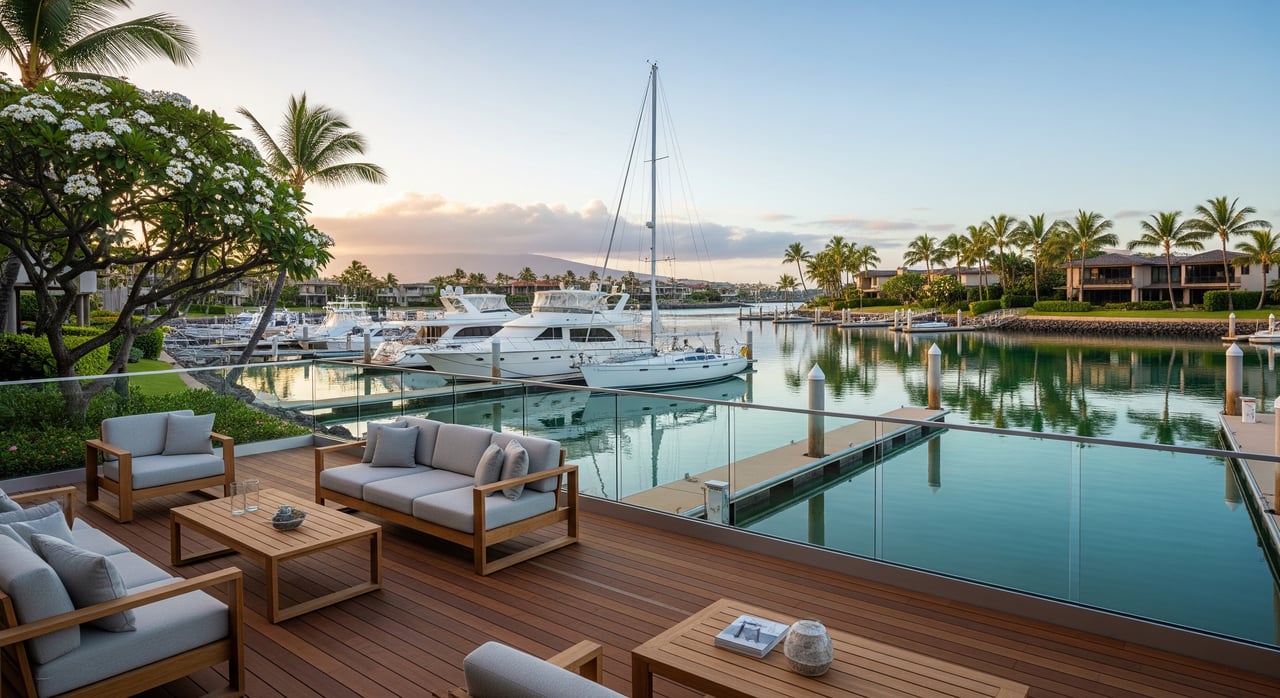
Picture your morning starting with glassy water on Maunalua Bay, a quick paddle before work, and a sunset stroll past boats bobbing in the marina. If you’re exploring a move to East Honolulu, you might be wondering what daily life truly feels like in Hawaii Kai’s marina communities. You want the lifestyle, but you also need the practical details on homes, commutes, and ownership costs. This guide walks you through both the experience and the fine print so you can decide with confidence. Let’s dive in.
What life feels like in Hawaii Kai
Hawaii Kai sits on Oʻahu’s southeastern shoreline, centered around the Koko Marina basin with neighborhoods that extend toward Koko Head and Portlock. The lifestyle is active and water-oriented, with residents often planning their days around ocean access, island trails, and outdoor gatherings.
You’ll find everyday conveniences close by. Koko Marina Center and nearby shopping hubs offer groceries, casual dining, and services, so quick errands are easy. Weekend plans often start on the water and end with relaxed meals on a lanai.
Morning to night: a typical day
Mornings on the water
Trade winds are usually calmer early, so many residents start with paddleboarding, kayaking, or quick surf or snorkel sessions before work or school. Runners and walkers frequent the paths along Maunalua Bay to catch the sunrise and keep a regular routine.
Families often coordinate school drop-offs at local public schools or preschools and then swing by coffee spots or the marina center for errands. It is a steady rhythm of ocean time, school runs, and quick to-dos.
Getting to work or school
Driving is the main commute mode. Non-peak trips to downtown Honolulu or Waikīkī can be roughly 20 to 35 minutes, while peak-hour traffic often adds significant time. TheBus offers routes connecting Hawaii Kai with the rest of Oʻahu, which some commuters use during peak hours. Honolulu’s rail service does not currently extend to Hawaii Kai, so there is no direct rail access today.
If you work from home, many single-family homes and larger townhomes offer flexible rooms for offices. It is common to see hybrid schedules that mix home days with in-town meetings.
Evenings and weekends
Weeknights lean casual: quick dinners at local eateries, grocery runs, and low-key workouts. The marina can be calmer again before sunset, so you might see evening paddlers out for one last session.
Weekends are about longer adventures. Popular choices include boating or fishing on the sheltered waters of Maunalua Bay, hiking Koko Head Trail or the Makapuʻu Lighthouse Trail, and snorkeling days at Hanauma Bay when permits or restrictions allow. Neighborhood events pop up periodically at parks, schools, or the marina.
Homes and marina living options
Single-family homes
You’ll see a range of single-family properties from hillside homes oriented to views to larger lots near Portlock. Floor plans commonly offer 3 to 5 bedrooms, garages, and year-round outdoor living areas such as lanais and patios.
Many older homes have been renovated, while others still reflect mid-century or 1960s–1980s designs. Open layouts that capture trade winds are common.
Condos and townhomes
Closer to the marina and shopping centers, you’ll find condos and townhomes that range from 1–2 bedroom units to larger multi-bedroom homes. Many communities include assigned parking and building amenities.
These properties can be attractive entry points into the neighborhood, and some developments near the water come with access to shared marina facilities.
Marina-front features that matter
If waterfront access is your priority, look closely at the dock or slip situation. Some single-family homes and condo communities include private docks, lifts, or slip assignments. Ownership and usage rights vary, so you want to confirm whether a slip is included, leased, or managed through an association.
Seawalls are common along the basin. Condition, permits, and maintenance history are essential to review because repairs can be significant and coastal rules may limit future alterations. The protected waters of Maunalua Bay make it appealing for small boats, kayaks, paddleboards, and fishing.
Getting around and essential services
Roads and transit
Kalanianaʻole Highway is the main corridor to central Honolulu and Waikīkī. Expect routine traffic during commute hours and heavier flow on weekends near popular recreation areas. TheBus runs multiple routes that connect Hawaii Kai with the island’s key destinations. Rail does not currently reach Hawaii Kai.
Schools and childcare basics
Hawaii Kai is served by Hawaiʻi State Department of Education schools. Because public school boundaries can change, verify current assignments with the DOE before you buy. East Honolulu also has a range of private schools and preschools, which vary by location and program.
Healthcare and emergencies
You’ll find clinics and urgent care options in East Honolulu for routine needs. Full-service hospitals are located in central Honolulu and nearby districts, with drive times that vary based on traffic. For emergency planning, consider travel time and local evacuation routes, especially if you live near the coast.
Costs and ownership realities
Beyond your mortgage
Many condos and some townhomes have homeowners’ association dues. These can cover building insurance, maintenance, shared marina facilities, water or utility components, and amenities. If you have a dock, lift, or seawall, budget for ongoing maintenance and any association fees or special assessments.
Utilities in Hawaiʻi often run higher than the national average. Factor in electricity for air-conditioning and the upkeep costs that come with coastal living.
Insurance and hazards
Homeowners insurance can be higher in Hawaiʻi due to wind and hurricane risk and elevated rebuilding costs. If a property lies in a FEMA-designated flood zone, lenders may require flood insurance. Coastal homes should be checked against tsunami evacuation maps and local siren systems. Sea level rise and shoreline management policies may affect future repairs or expansions near the water.
Permits and marina rules
Shoreline structures and docks usually require permits from the City and County of Honolulu’s Department of Planning and Permitting and often from the State Department of Land and Natural Resources when work involves state-managed shorelines or submerged lands. Community rules can also set limits on boat size, slip usage, and repair methods. For any renovation, confirm building permits and compliance with stormwater rules.
Smart buyer checklist for marina communities
- Confirm whether a marina slip is included, leased, or managed by an association, and review all related fees and rules.
- Review seawall and dock condition, maintenance records, and permitting history. Ask when they were last inspected or repaired.
- Verify HOA dues, what they cover, and whether any special assessments are pending.
- Check FEMA flood maps, local tsunami evacuation zones, and any history of storm or flood claims.
- Ask for average utility costs and property tax expectations for the specific neighborhood.
- Confirm current public school boundaries with the Hawaiʻi DOE and research nearby private options.
- Test commute routes during peak hours and explore TheBus schedules if you plan to use public transit.
- Compare recent sales for marina-front condos, inland single-family homes, and Portlock or Koko Head properties to understand market trends.
Is Hawaii Kai right for you?
If your ideal day includes time on the water, easy access to island hikes, and a relaxed but active routine, Hawaii Kai’s marina communities deliver. The trade-off is planning for commute patterns, higher insurance and utility costs, and coastal permitting steps if you own waterfront improvements.
When you are ready to explore, you deserve clear guidance that blends lifestyle insight with design-forward, data-informed representation. For a personalized tour of neighborhoods and a smart plan tailored to your goals, connect with Sue Jo. Bilingual service in Korean and English is available.
FAQs
How long is the commute from Hawaii Kai to downtown Honolulu?
- Non-peak drives can be roughly 20 to 35 minutes, while peak-hour traffic often adds significant time.
Does Hawaii Kai have rail service to Honolulu’s urban core?
- No. Honolulu’s rail system does not currently extend to Hawaii Kai, so there is no direct rail access today.
What should I know about marina slips when buying?
- Slip rights vary. Some homes and condos include private slips, others have leased or association-managed access. Always verify ownership, rules, and fees.
Are there extra costs for seawalls and docks?
- Yes. Seawalls and docks require maintenance and may involve association fees or special assessments. Permitting history and condition are important to review.
Do I need flood insurance for a waterfront home?
- If the property lies in a FEMA-designated flood zone and you have a mortgage, your lender may require flood insurance. Confirm flood zones before you buy.
What school options are in Hawaii Kai?
- The area is served by Hawaiʻi DOE public schools, and East Honolulu offers various private and preschool options. Confirm current public school boundaries with the DOE.